A practical guide for independent consultants
A consulting proposal template for a clear client decision.
Turn a good sales conversation into a proposal that reflects the client's situation, defines the work, and makes the next step obvious.
Updated
Use your LinkedIn PDF to create a private draft. Review every claim before publishing.
CONSULTING PROPOSAL
Decision support for a complex change
- Context
- Outcome
- Scope
- Decision
- Confirm the scope and start date
The proposal's job
Make the decision easier to inspect.
A useful proposal is a record of shared understanding. It gives the client a chance to correct the problem, the outcome, and the boundaries before work begins.
Write it after enough discovery to be specific. If the client still cannot describe the decision, the people involved, or the cost of delay, another conversation is usually more useful than a polished document.
Seven sections
What to include in a consulting proposal.
Keep each section as short as the decision allows. A small engagement may fit on two pages; a complex one needs more detail.
- 01
Client context
Reflect the situation in the client's language. Keep it short enough that they can correct it.
- 02
Desired outcome
Describe the decision or change the engagement should support, without promising a result you cannot control.
- 03
Scope
List the work you will do and name the important work that sits outside the engagement.
- 04
Approach
Show the sequence, working rhythm, and moments when the client needs to participate.
- 05
Timing
Set milestones, dependencies, and the conditions that could change the schedule.
- 06
Commercial terms
State fees, payment timing, expenses, and the period for which the proposal remains valid.
- 07
Next decision
End with one action, one owner, and a clear way to accept or discuss the proposal.
Copy and adapt
A reusable proposal outline.
Replace every bracketed prompt. Delete any section that does not help this client make the decision.
1. What I heard
[Two or three sentences on the present situation, the trigger for action, and the people affected.]
2. What this work should enable
[The decision, capability, or change the engagement supports. Name how you will judge progress.]
3. What I will do
[Deliverables, activities, milestones, and the evidence the client receives at each stage.]
4. What I need from you
[Access, decisions, subject-matter input, review time, and one accountable client owner.]
5. Boundaries and terms
[Work outside scope, assumptions, timing, fees, payment schedule, expenses, and proposal validity.]
6. Next decision
[The one action that accepts the proposal or opens the final scope conversation.]
The proposal handoff
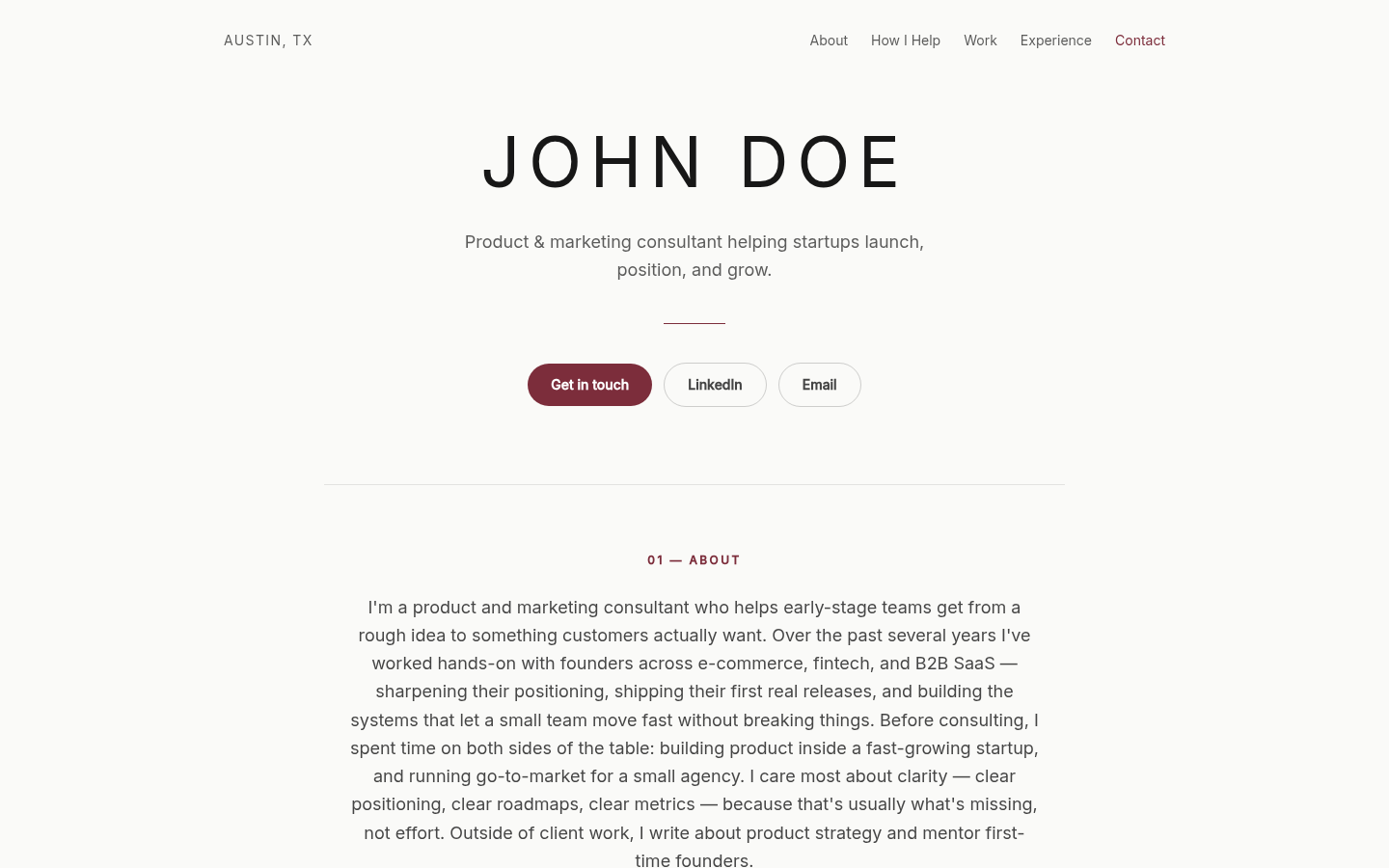
Let the proposal explain the work. Let your site explain the person behind it.
A proposal is specific to one engagement. A consultant site can carry the stable context around it: your positioning, services, selected work, writing, recommendations, experience, and contact route.
Storypage starts from your LinkedIn PDF and optional materials, creates a private draft, and lets you review the writing and choose from eight designs before you publish.
Compare the eight consultant website designsBefore you send
Run one final decision check.
- Does the context sound like the client's words, not a generic diagnosis?
- Can the client see what is included, excluded, and expected from them?
- Is every result claim, example, and credential accurate and shareable?
- Is there one obvious next action, with an owner and a date?
Give the next proposal a credible place to land.
Build a private consultant site from the professional material you already have, then check every claim before you publish.
Build my private consultant site